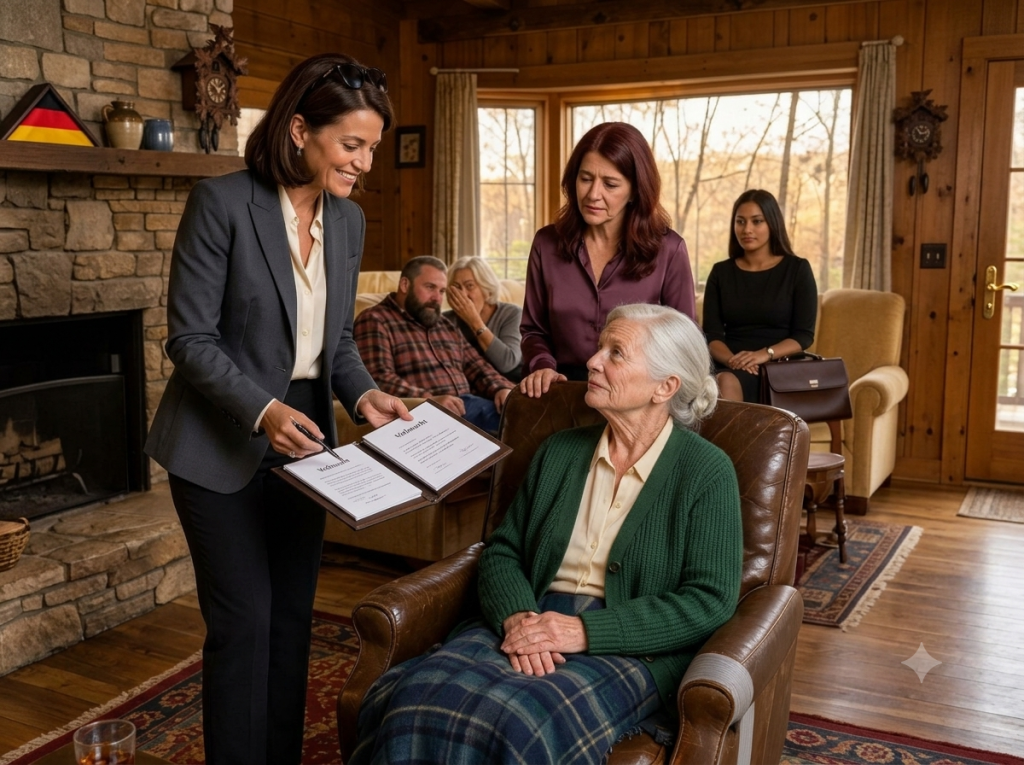
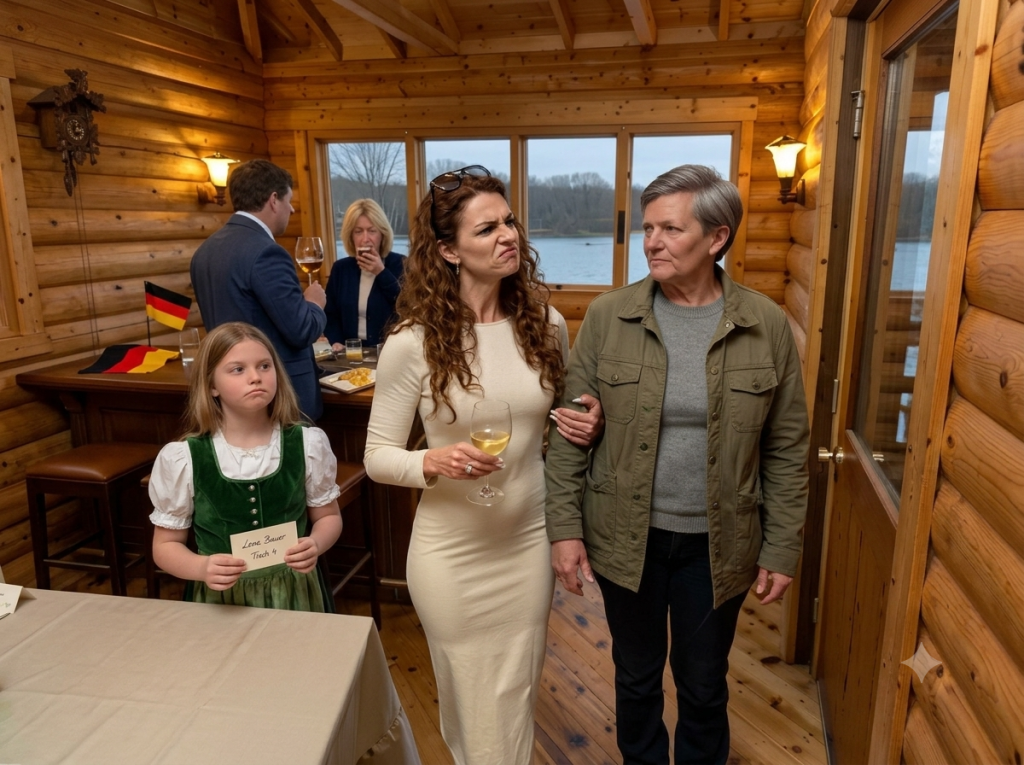
“I think he knew by the second time. He was afraid of looking weak, and he chose the wrong way to prove he wasn’t.”
Spears nodded slowly.
She understood the distinction.
She started to leave, then stopped.
“What’s the cross actually for, Sergeant?”
I looked at her.
She hadn’t asked with the excitement people sometimes showed when they wanted an impressive story.
She was asking carefully.
She wanted to understand the person leading her platoon.
“Paktika Province,” I said. “Afghanistan. July 2020.”
She waited.
I didn’t add anything.
After a moment, she nodded.
“Okay, Sergeant.”
She walked out.
It was the most I had said about the decoration to someone who hadn’t already read the official citation.
I stood beside the workbench for a while after she left.
Bentine’s words returned to me.
I could keep the drawer shut.
Or I could be a platoon sergeant.
Perhaps I was beginning to understand what he meant.
At 1:30 that afternoon, Captain Meredith Laauo called from division headquarters.
She was General Achib’s aide.
The general wanted to see me at three o’clock.
I said I would be there.
Bentine offered to drive.
He said it casually, but I suspected he already knew the invitation was coming.
We rode mostly in silence.
As he parked outside division headquarters, he switched off the engine and looked toward the building.
“He’s going to give you a choice about the lieutenant.”
“I know, First Sergeant.”
Bentine rested one hand on the steering wheel.
“Whatever he asks, take your time. Nobody’s timing you. You don’t have to decide anything in ten seconds.”
“Thank you.”
He waved away the gratitude.
Then he took out his phone and settled in to wait.
General Achib’s office was on the third floor.
It was a corner room with windows facing south and west. Beyond the glass, pine trees marked the edge of the developed installation, and the training areas stretched into the distance.
The office smelled faintly of strong coffee and wood polish.
His desk had a glass top. Family photographs sat near one corner, angled toward his chair rather than outward toward visitors.
I noticed that detail.
They were there for him.
Captain Laauo showed me inside and closed the door.
The general wasn’t standing behind his desk.
He came around it and indicated a chair.
Then he sat opposite me.
It was the same kind of choice he had made in Afghanistan, when he had crouched instead of standing over me.
His hair had gone gray at the temples.
The lines around his eyes were deeper.
The eyes themselves hadn’t changed.
“How are you, Deanna?”
“I’m better than I was, sir.”
I meant it.
That surprised me.
He nodded as though it was the only answer he needed.
Then he placed his hand on a document resting on the edge of his desk.
Lieutenant Duvane’s memorandum.
The paper had a faint coffee-ring mark in one corner.
I recognized the fold down the middle.
Bentine hatte sich Anfang der Woche darum gekümmert.
General Achib blickte auf das Dokument und dann auf mich.
„Das gibt mir genug, um die Karriere dieses jungen Mannes in eine Richtung zu lenken, von der er sich nicht so schnell erholen wird.“
Ich habe nicht gesprochen.
„Er befahl einem Soldaten in Formation, entgegen der Vorschrift zu handeln, für deren Einhaltung er selbst verantwortlich war. Er dokumentierte seine Drohung. Dann wiederholte er die Forderung vor der gesamten Einheit.“
Der General klopfte auf das Memorandum.
„Sie haben die Wahl.“
So etwas hatte ich erwartet.
Bentine hatte mich gewarnt.
Doch die Wahlmöglichkeit direkt angeboten zu bekommen, war etwas anderes, als sie sich während der Fahrt vorzustellen.
Ich dachte an Duvane auf dem Exerzierplatz.
Ich erinnerte mich an seinen Gesichtsausdruck, als der General hinter ihm sprach.
Die plötzliche Steifheit in seinen Schultern.
Die Art und Weise, wie er die Frage zur Regelung richtig beantwortet hatte.
Und wie seine Stimme geklungen hatte, als er die Verantwortung für das Detail wieder übernahm.
Ich hielt ihn nicht für einen besonders grausamen Mann.
Er war ein junger Offizier, der Angst davor hatte, seine Autorität zu verlieren, und diese Angst hatte ihn dazu verleitet, die Autorität zu missbrauchen, die er zu schützen versuchte.
Er hatte einen schweren Fehler begangen.
Dann wiederholte er es.
Ich hatte kein Interesse daran, so zu tun, als wäre es anders.
Aber ich erinnerte mich daran, dreiundzwanzig gewesen zu sein.
Ich erinnerte mich an meine erste Einheit, an die Fehler, die ich beim Versuch, ernst genommen zu werden, gemacht hatte, und an die höheren Unteroffiziere, die mich korrigiert hatten, als es einfacher gewesen wäre, mich abzuschreiben.
Ein Stabsfeldwebel gab mir insbesondere die Chance, aus Situationen zu lernen, die mich jahrelang hätten verfolgen können.
Er hatte mein Verhalten nicht entschuldigt.
Er hatte mich dazu gebracht, die nötige Arbeit zu leisten, um es zu verstehen.
Popular Posts
→- 1
- 2
- 3
- 4



Recently Viewed
Stories you read recently will appear here.