Dann kündigte die Brigade einen Einheitslauf an.
Es wurde als eine Veranstaltung zur Stärkung der Moral beschrieben. Ungefähr viertausend Soldaten würden sich um sechs Uhr morgens in Laufformation versammeln, der Gruber Road folgen und auf dem Exerzierplatz zu einer Kommandobesprechung ankommen.
Ich hatte an unzähligen solcher Läufe teilgenommen. Sie waren teils Übung, teils Tradition und teils Demonstration, dass die Brigade sich als Formation bewegen konnte.
I put on my physical training uniform and reported with my platoon.
Second Lieutenant Marcus Duvane was also relatively new to the brigade.
He was twenty-three, recently commissioned through ROTC at Ohio State, and assigned to the support battalion staff while waiting for a platoon position.
I had seen him twice before.
Once, he was walking through a parking lot near battalion headquarters while reading papers on a clipboard. The other time, he was eating alone in the dining facility.
He looked like a young officer who cared intensely about doing things correctly but hadn’t yet figured out which things deserved the most attention.
His uniform was neat. His bearing was deliberate. His expression often suggested that he was reviewing an invisible checklist.
I recognized the type.
New officers are told that soldiers will test them. Some interpret that warning as a reason to listen carefully and establish professional credibility. Others become preoccupied with proving that their rank gives them authority.
I didn’t know which kind Duvane would become.
The run began without difficulty.
The air was cold, and the pine trees along Gruber Road stood dark against the morning sky. Unit guidons moved above the formation. Cadence drifted from a speaker near the roadside.
I ran in the middle of my platoon’s element, close enough to watch our pace and identify anyone beginning to struggle.
I wasn’t struggling myself.
Years of training had prepared me for much longer distances under far less comfortable conditions.
We had covered roughly two miles when I noticed Lieutenant Duvane moving out of his element.
His battalion was positioned several ranks to my right and slightly ahead. Instead of maintaining his place, he drifted backward and crossed toward me.
I noticed because movement that doesn’t match the surrounding formation stands out immediately.
He pulled alongside me.
“Sergeant.”
I kept my pace.
“Yes, sir.”
“Did you not see me when you formed up?”
“I saw you form up with your element, sir.”
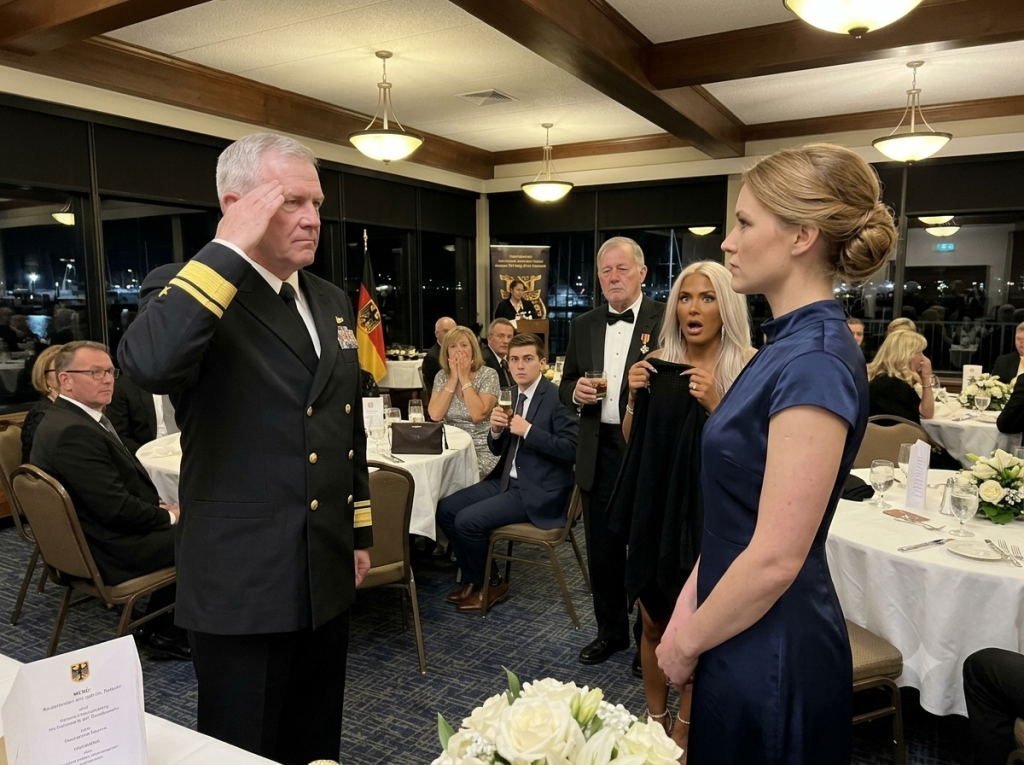
“Then where was my salute?”
The question took me a moment to process.
We were running in a mass formation, with soldiers occupying the road in organized ranks. Stopping to deliver individual courtesies would have disrupted the formation and created unnecessary confusion.
“Sir, we’re moving in formation. An individual salute isn’t appropriate here.”
He continued running beside me.
“I don’t think you understand the standard.”
His breathing was noticeably heavier than mine. I could hear it between his words.
I kept my eyes on the soldier ahead of me.
“I understand the regulation, sir. The person responsible for the formation handles the salute. We don’t stop and render individual salutes while running in a brigade formation.”
He remained beside me for several more strides.
I wasn’t trying to embarrass him. I wasn’t challenging his rank. I was explaining the procedure as plainly as I could while continuing to run.
But he had already decided what the situation meant.
To him, I was refusing an instruction.
„Ich werde das schriftlich festhalten“, sagte er. „Es muss dokumentiert werden. Das ist bereits das zweite Mal, dass Sie wegen eines Verstoßes gegen die Begrüßungsregeln korrigiert wurden.“
Das hat mich dazu gebracht, mich umzudrehen.
Es hatte keine erste Korrektur gegeben.
Über das Grüßen hatten wir vorher noch nie gesprochen.
An seinem Gesichtsausdruck konnte ich erkennen, dass er das Problem fast sofort nach dem Aussprechen begriffen hatte. Einen Moment lang wirkte er unsicher. Dann verfinsterte sich sein Gesicht wieder.
Er hatte die Anschuldigung so laut ausgesprochen, dass sie auch von nahestehenden Soldaten gehört werden konnte, darunter Korporal Petro, der links neben mir lief.
Ein Rückzug davon hätte bedeutet, den Fehler einzugestehen.
Duvane war offenbar noch nicht bereit dazu.
„Ich verstehe, Sir“, sagte ich.
Er kehrte in sein Element zurück.
Die Formation setzte sich über ein weiteres Straßenstück fort, bevor sie auf dem Exerzierplatz endete. Die Brigade löste sich in kleinere Gruppen auf, die Soldaten begaben sich zu ihren Arbeitsbereichen, und der gewohnte Freitagsablauf nahm seinen Lauf.
Ich ging davon aus, dass der Vorfall zu einer jener peinlichen Begegnungen beim Militär werden würde, die die Leute in der folgenden Woche schon wieder vergessen hatten.
Ich habe mich geirrt.
Am Montagmorgen rief mich Oberfeldwebel Harold Bentine in sein Büro.
Bentine war fünfzig Jahre alt, stammte ursprünglich aus Savannah, Georgia, und hatte sechsundzwanzig Jahre in der Armee gedient, davon elf Jahre als Oberfeldwebel.
Er war während seiner gesamten Laufbahn Kavallerieaufklärer gewesen.
Popular Posts
→- 1
- 2
- 3
- 4



Recently Viewed
Stories you read recently will appear here.