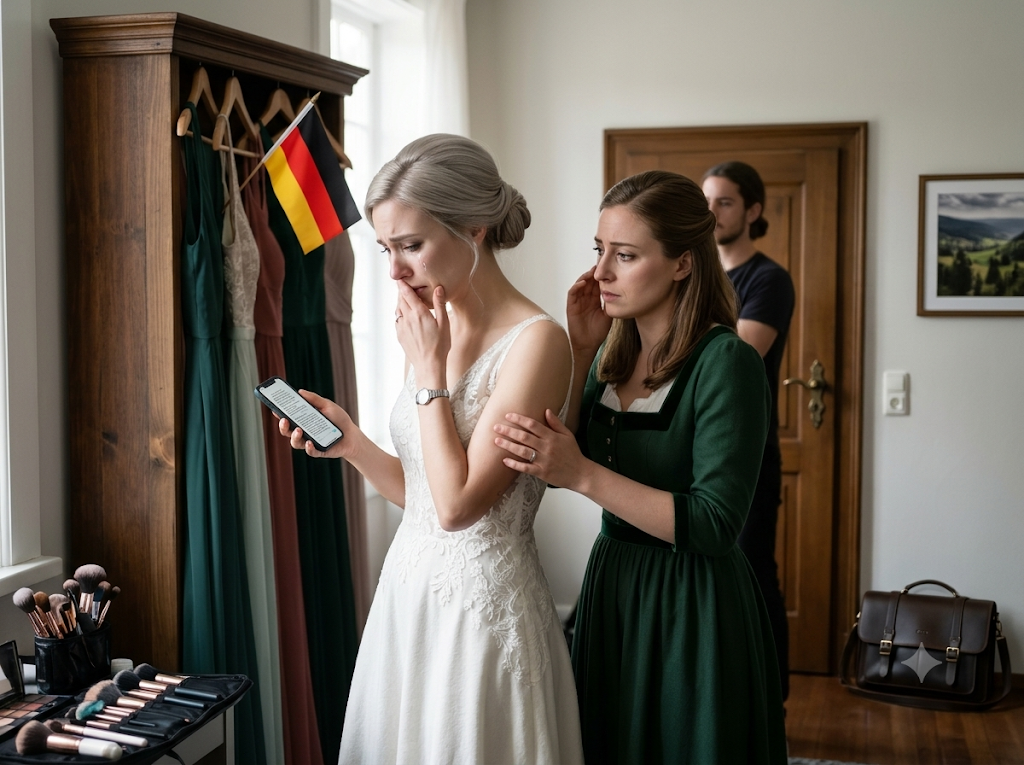
Aber der Inhalt erklärte zu viele Dinge, die ich bisher nur schwer verstanden hatte.
Tessa sah mich an.
„Alles in Ordnung?“
Ich nickte langsam.
“NEIN.”
Ich holte noch einmal tief Luft.
„Aber ich weiß, was ich tun muss.“
Ich begann, das Material zu sammeln.
Screenshots.
Nachrichten.
Termine.
Audiodateien.
Ich habe alles in Ordnern sortiert, damit ich nachvollziehen konnte, was wann gesagt wurde.
Ich habe gegebenenfalls Anmerkungen hinzugefügt und dabei zwischen dem, was ich direkt überprüfen konnte, und dem, was nur auf den Screenshots zu sehen war, unterschieden.
Ich wollte nicht schon wieder ein Familientreffen mit Streitereien über Erinnerungen verbringen.
Das hatte ich mein ganzes Leben lang getan.
I wanted a clear record of what had actually happened.
I didn’t contact Mom.
I didn’t send Rachel a long message explaining what I’d discovered.
For the moment, I continued planning the wedding.
Then Lauren contacted me again.
She’d seen a public video Rachel had posted.
Apparently, my sister was announcing that she would officiate our wedding.
I opened the video.
Rachel was standing in front of a mirror, practicing a speech.
The caption described how honored she was to officiate her little brother’s big day and how much I’d always wanted her to be involved.
I stared at it.
Rachel wasn’t invited.
She hadn’t been asked to officiate.
Tessa and I had already chosen someone else.
Our actual officiant was Mrs. Kramer, my former high school English teacher.
She was one of the adults who’d encouraged me when I was younger, especially when I was the quiet student who preferred sitting near the back of the classroom.
She believed in my writing and took my interests seriously.
When I asked her to officiate, she became emotional.
Having her there meant something to me.
Rachel’s video wasn’t simply inaccurate.
It was another attempt to give herself a central role in an event that belonged to Tessa and me.
Tessa watched the video over my shoulder.
“That’s a pretty impressive job to invent for yourself,” she said.
Despite everything, I laughed.
Then I looked at the wedding plans spread across our table.
For months, I’d been reacting to what my parents and sister decided to do.
I wanted that to stop.
I spoke with Lauren first.
She came over with her laptop, and we reviewed the messages, fake invitations, and Rachel’s public announcement.
Lauren was visibly upset.
She’d been the person who first alerted us to the fabricated save-the-date, and now she understood how much more had been happening behind the scenes.
She agreed to help organize the records and keep track of what information had been shared.
That way, if relatives asked questions later, we could explain what happened without relying on a confusing collection of messages.
Next, I contacted James, an old college friend who worked in event security.
I explained that we wanted our wedding to remain a private gathering and were concerned that uninvited relatives might arrive expecting to be admitted.
James agreed to help.
He had a direct sense of humor and immediately joked about how firmly he’d enforce the guest list.
I told him I wanted everything handled respectfully.
If someone wasn’t invited, they could be told that and asked to leave.
There was no reason to turn our wedding into a public scene.
We also spoke with Priya, one of Tessa’s friends who worked in digital marketing.
She helped us create a simple wedding website that clearly explained the nature of the event.
We wrote a message saying we’d chosen to celebrate quietly with people who respected our boundaries.
We asked anyone without a personal invitation to honor the private nature of the gathering.
We didn’t name my family.
We didn’t mention Thanksgiving.
Wir haben lediglich erklärt, wie die Hochzeit ablaufen würde.
Auf der Website wurde auch Frau Kramer als unsere eigentliche Traurednerin genannt.
Priya half dabei, die Informationen so zu ordnen, dass die Gäste ohne Verwirrung das finden konnten, was sie brauchten.
Lauren sorgte dafür, dass die korrekten Informationen diejenigen erreichten, denen die unautorisierten Ankündigungen gezeigt worden waren.
Innerhalb von zwei Tagen verschwand Rachels öffentliches Video.
Einen Tag später schickte mir Mama eine Nachricht.
Sie wollte wissen, warum Verwandte behaupteten, sie und ihr Vater seien nicht eingeladen worden.
Ich habe es gelesen.
Dann habe ich mein Handy weggelegt.
Diesmal bedurfte die Antwort keiner weiteren Argumentation.
Sie hatten keine Einladungen erhalten, weil wir sie nicht eingeladen hatten.
Es war nichts Kompliziertes daran.
Wir haben auch den RSVP-Prozess transparent gestaltet.
Nur Namen auf unserer genehmigten Gästeliste konnten bestätigt werden.
Alle anderen erhielten eine höfliche Nachricht, in der erklärt wurde, dass wir keine weiteren Gäste aufnehmen können.
Das System wurde nicht entwickelt, um Menschen bloßzustellen.
Es diente dazu, Verwirrung zu vermeiden und sicherzustellen, dass unsere private Veranstaltung die geplante Größe beibehielt.
Popular Posts
→- 1
- 2
- 3
- 4




Recently Viewed
Stories you read recently will appear here.